How Clothing Choices Can Reduce HVAC Energy Consumption – Backed by Standards
By Roshan Ramesh, DC Design Lead, Technavious
In many Indian offices today, western formal wear is the default attire. These garments carry a high clo value (~1.0), which means higher thermal insulation, higher metabolic heat, and the need for lower indoor temperatures (20–24°C) to stay comfortable. During peak summers, achieving these temperatures becomes difficult due to high ambient heat, resulting in increased HVAC load and energy consumption.
According to ASHRAE Standard 55 and ISHRAE Comfort Standards, thermal comfort depends heavily on clothing insulation. Higher clo values shift the comfort range toward lower indoor temperatures, increasing cooling demand.
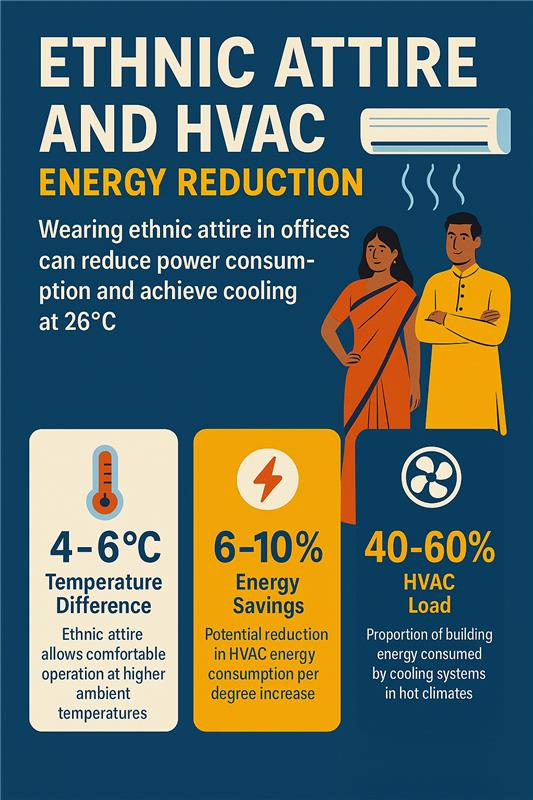
Ethnic wear—made from natural fabrics like cotton, khadi, and linen—typically has a lower clo value (~0.5). These materials offer better breathability, lower insulation, and excellent suitability for warm climates. As per comfort standards, such clothing allows occupants to remain comfortable at 26–28°C, which aligns with the natural comfort band of 24–26°C.
Shifting workplace attire from western formals to ethnic wear enables a 4–6°C rise in comfortable thermostat settings, which can deliver 4–8% energy savings per degree. Considering HVAC systems consume 40–60% of total building energy, this simple change creates a major impact on power reduction.
This idea shows how adaptive comfort, supported by ASHRAE and ISHRAE guidelines, can be achieved through climate-appropriate clothing choices rather than excessive cooling.
Ethnic wear isn’t just cultural—it’s scientifically efficient and energy-saving.
As Technavious, we focus on data centres, and we can raise the question of whether we are fully leveraging the energy, cost, and sustainability benefits that local or indigenous materials can offer — and if not, what is holding back their broader adoption?”