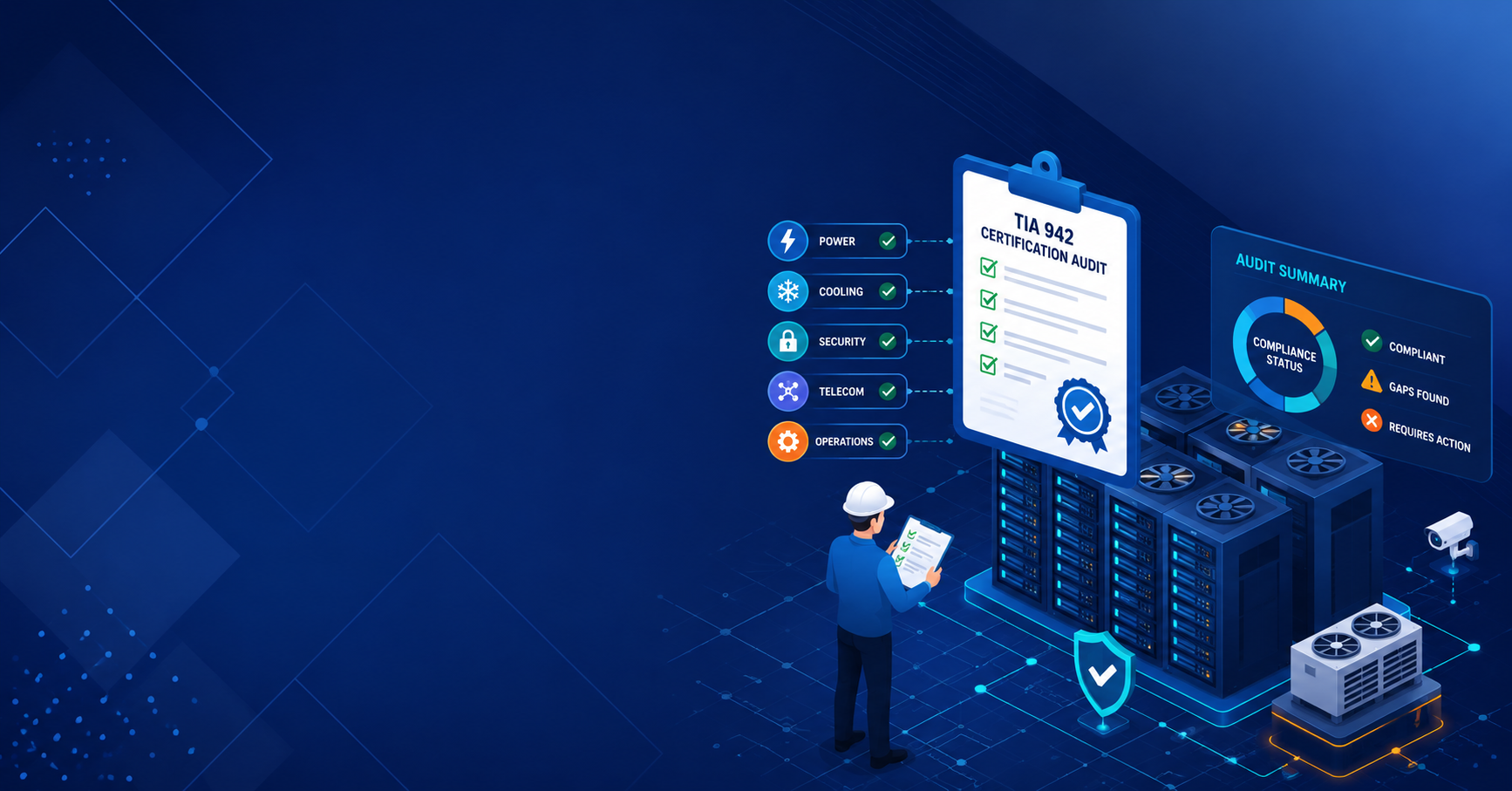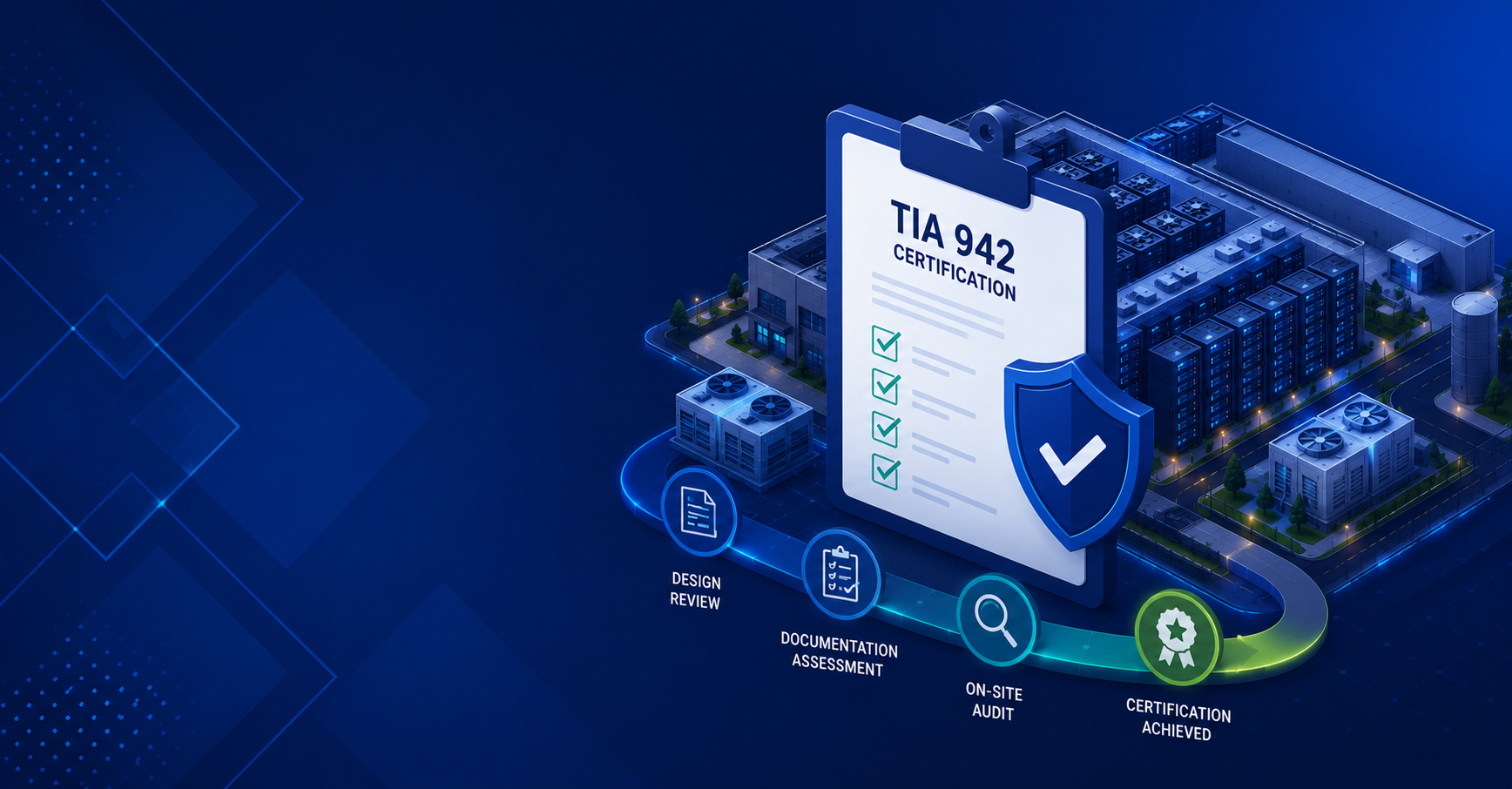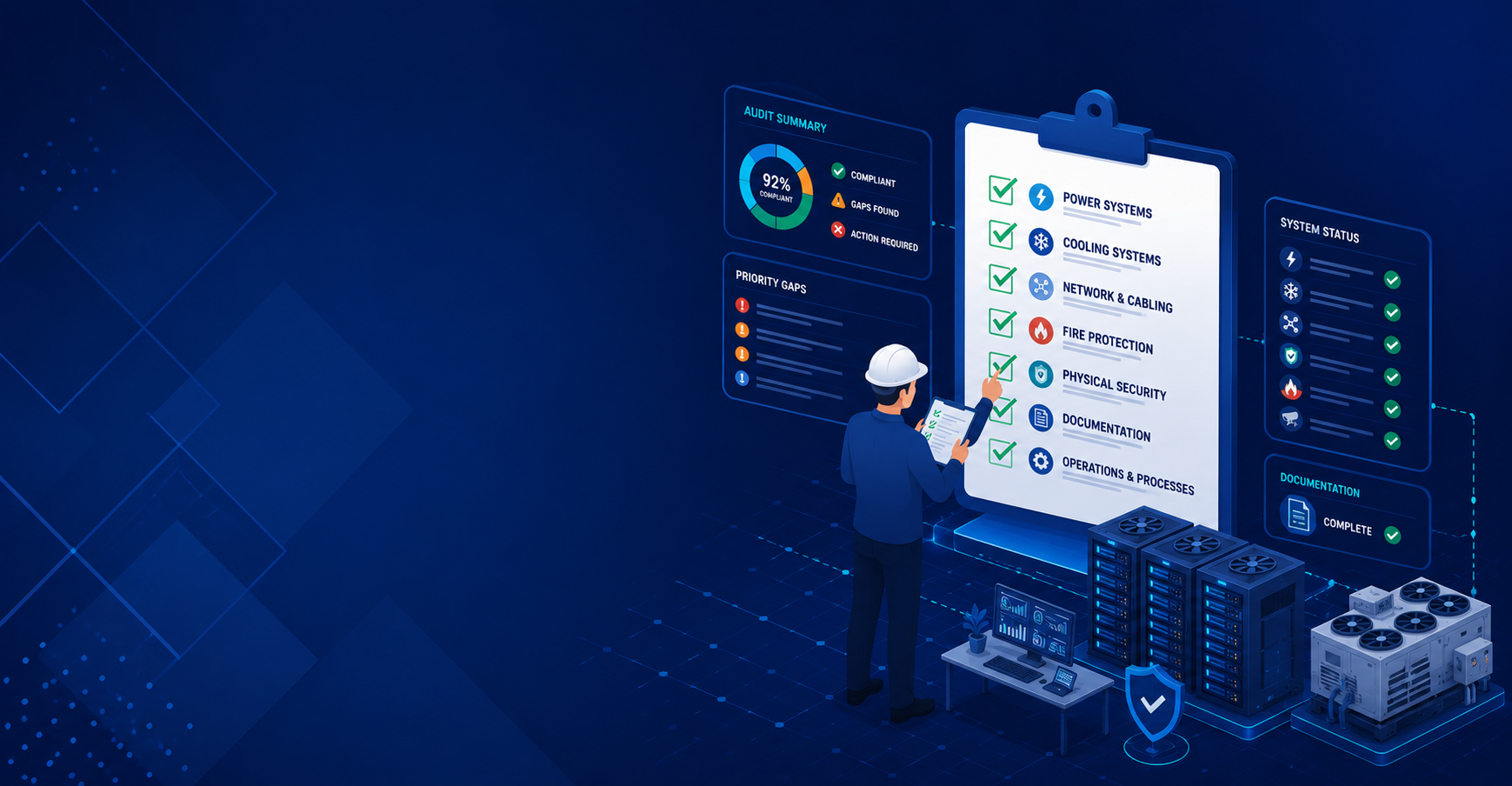
The Final Operational Readiness Review Before Customer Workloads Enter the Facility
Introduction: The Last Opportunity to Reduce Operational Risk
The period immediately before a data centre goes live is one of the most critical stages in the entire project lifecycle. Construction may be complete. Equipment may have been commissioned. Integrated Systems Testing may have been signed off. Operational teams may already be preparing for customer onboarding.
Despite this, the facility may still carry significant risk.
Configuration errors, documentation gaps, incomplete maintenance arrangements, incorrect alarm settings, and unresolved infrastructure dependencies often remain hidden until the final stages of project delivery. In many cases, these issues only become visible when an independent operational readiness audit is conducted.
A structured pre-go-live audit provides the final opportunity to identify and address these risks before IT load is introduced, customer service level agreements become active, and the facility enters commercial operation.
Unlike commissioning, which focuses primarily on technical functionality, a go-live audit evaluates whether the facility is truly ready to operate as a business-critical environment.
This distinction is important because operational failures are rarely caused by a single equipment issue. They are more commonly the result of weaknesses across multiple systems, processes, and teams.
Why a Pre-Go-Live Audit Is Different from Commissioning
Commissioning confirms that systems perform according to design requirements.
A pre-go-live audit answers a different question.
Can this facility be operated safely, reliably, and consistently from day one?
This requires a broader assessment that extends beyond engineering performance.
A comprehensive operational readiness review evaluates:
· Infrastructure functionality.
· Documentation quality.
· Operational procedures.
· Staff preparedness.
· Alarm configuration.
· Maintenance arrangements.
· Vendor support readiness.
· Security controls.
· Emergency response capability.
The objective is to confirm that both infrastructure and operations are prepared for real-world conditions.
A facility that passes commissioning may still fail an operational readiness assessment if critical processes, documentation, or support arrangements remain incomplete.
Domain 1: Electrical Infrastructure
Electrical systems form the foundation of operational resilience. Every critical power path should be validated before go-live.
The audit should confirm:
· As-built single-line diagrams accurately reflect installed infrastructure.
· UPS systems have been tested under representative load conditions.
· Battery runtime has been measured and documented.
· Generator testing has been completed and recorded.
· Automatic Transfer Switch performance meets specification.
· Emergency Power Off circuits function correctly.
· Electrical labelling aligns with documentation.
· Grounding and bonding systems have been verified.
· Earthing measurements have been completed.
· Transformer testing records are available.
· Protection devices have been tested and documented.
The goal is not simply to confirm functionality. The goal is to ensure that infrastructure can support operations safely and predictably under both normal and fault conditions.
Domain 2: Mechanical and Cooling Systems
Cooling infrastructure must be capable of maintaining stable environmental conditions throughout all operating scenarios.
A pre-go-live audit should validate:
· Chilled water system readiness.
· Water quality and treatment programmes.
· Chiller redundancy performance.
· Automatic failover functionality.
· CRAC and CRAH configuration.
· Airflow management effectiveness.
· BMS integration and control logic.
· Pump redundancy performance.
· Cooling tower readiness.
· HVAC and fire system interlocks.
· Baseline Power Usage Effectiveness measurements.
Many facilities focus heavily on cooling capacity while overlooking cooling control performance. In practice, configuration and controls issues are often responsible for early operational problems.
Domain 3: Fire Protection and Life Safety
Life safety systems must function correctly under all conditions.
The audit should confirm:
· Fire suppression system acceptance testing has been completed.
· Fire authority approvals are current.
· Detection systems have been tested zone by zone.
· HVAC shutdown sequences operate correctly.
· Emergency lighting is fully functional.
· Suppression agent concentrations meet design requirements.
· Abort mechanisms are operational.
· Fire extinguishers are correctly located.
· Pre-action systems have been tested.
· Detector sensitivity testing has been completed.
· Operations personnel have received training.
These systems are rarely used during normal operations, which makes validation before go-live even more important.
Domain 4: Physical Security
Physical security controls protect infrastructure, personnel, and customer assets.
A readiness review should verify:
· Access control functionality.
· Credential management processes.
· CCTV coverage and recording capability.
· Visitor management procedures.
· Security operations centre integration.
· Perimeter security measures.
· Security team preparedness.
· Key management controls.
Particular attention should be given to access rights created during commissioning and construction. Temporary credentials frequently remain active beyond project completion and can introduce unnecessary risk.
Domain 5: Network and Cabling Infrastructure
Network resilience depends on both infrastructure quality and documentation accuracy.
The audit should validate:
· Diverse fibre entry routes.
· Physical route separation.
· Structured cabling certification records.
· Cable labelling accuracy.
· Network equipment readiness.
· Optical distribution documentation.
· Cable pathway compliance.
· Bend radius compliance.
· Remote management access.
Connectivity issues discovered after go-live can be significantly more disruptive than those identified during readiness reviews.
Domain 6: BMS, DCIM, and Monitoring Systems
Monitoring platforms provide the operational visibility required to manage critical infrastructure effectively.
The audit should verify:
· Alarm visibility across all critical systems.
· Escalation workflows.
· Notification delivery.
· DCIM data accuracy.
· Remote monitoring capability.
· Threshold configuration.
The Most Common Findings During Pre-Go-Live Audits
Although every facility is different, several issues appear repeatedly across operational readiness reviews.
Incomplete As-Built Documentation
Infrastructure changes made during construction are often not reflected in final documentation. These discrepancies typically emerge during power path tracing, cable verification, or operational reviews.
Alarm Configuration Errors
Many facilities continue using default vendor alarm settings rather than site-specific operating thresholds. This can result in delayed response or excessive nuisance alarms.
Missing Certificates and Compliance Records
Testing certificates, fire approvals, and equipment documentation are frequently incomplete at the point of operational handover.
Security Credential Issues
Temporary credentials created during construction and commissioning phases are often overlooked and remain active beyond go-live.
Vendor Support Gaps
Service agreements and emergency support arrangements may still be under negotiation despite the facility approaching operational status.
None of these issues are difficult to resolve. The challenge is identifying them before they become operational problems.
Who Should Perform the Audit?
The most effective pre-go-live audits are conducted independently.
Project teams naturally become familiar with the facility they have spent months or years developing. This familiarity can make it difficult to identify residual risks objectively.
An independent audit team provides a fresh perspective and is more likely to challenge assumptions, identify gaps, and verify readiness objectively.
For large-scale facilities, particularly those pursuing TIA 942 certification, hyperscaler occupancy, or enterprise colocation operations, independent operational readiness validation is increasingly considered best practice.
Key Takeaways
A pre-go-live audit is not simply a final project checklist. It is the last structured opportunity to identify and eliminate operational risk before the facility begins supporting customer workloads.
Electrical systems, cooling infrastructure, fire protection, security controls, network connectivity, monitoring platforms, and operational processes all require validation. Documentation quality and staff readiness are equally important because infrastructure alone does not determine operational success.
The most common findings are rarely major engineering failures. They are usually documentation gaps, configuration errors, incomplete support arrangements, or operational readiness issues that can be corrected if identified early.
Facilities that invest in comprehensive operational readiness reviews consistently achieve smoother transitions into service, stronger reliability performance, and fewer post-handover incidents.
Ultimately, the objective is simple. Before customers trust the facility with critical workloads, the organisation must be confident that the infrastructure, systems, processes, and people are fully prepared to support them.
Over seventy clients across fifteen countries have trusted Technavious with their most significant data center builds.