Understanding the Compliance Issues That Delay Certification and Increase Remediation Costs
Introduction: Certification Failure Is Rarely About One Major Problem
Most organisations preparing for TIA 942 certification assume that failure occurs because of a significant design flaw or a major infrastructure deficiency. In reality, that is rarely the case.
Certification failures are typically the result of multiple smaller gaps that accumulate across power systems, cooling architecture, documentation, operational processes, and physical security. Individually, these issues may appear manageable. Collectively, they can prevent a facility from meeting the requirements of its target Tier rating.
This often comes as a surprise to project teams. Infrastructure may have been designed by experienced consultants, constructed by reputable contractors, and operated by capable facilities teams. Yet certification audits continue to identify recurring issues that delay certification, increase remediation costs, and require additional audit cycles.
Understanding these common failure points is one of the most effective ways to improve certification readiness. Organisations that identify and address these issues early generally experience smoother audits, lower remediation costs, and faster certification outcomes.
Why TIA 942 Certification Matters
The ANSI/TIA-942 standard establishes infrastructure requirements across power, cooling, telecommunications, architecture, security, and operational resilience.
Certification provides independent validation that a facility meets recognised standards for availability, redundancy, maintainability, and operational reliability.
For colocation providers, enterprise operators, hyperscaler facilities, and institutional investors, certification has become an increasingly important indicator of infrastructure quality. It influences customer confidence, procurement decisions, financing discussions, insurance assessments, and long-term asset value.
Because of this, certification failure has consequences that extend beyond compliance. Delays can affect commercial launch plans, customer acquisition strategies, and investment timelines.
The Most Common Reasons Data Centres Fail TIA 942 Certification
1. Power Path Redundancy Does Not Meet Tier Requirements
Power infrastructure remains the single largest source of certification failure.
Most Tier III and Tier IV certification issues originate from redundancy gaps that are either misunderstood during design or overlooked during implementation.
On paper, a facility may appear compliant. During the audit, however, detailed tracing of the electrical path often reveals hidden single points of failure that compromise redundancy requirements.
Common findings include:
· Single points of failure within switchgear arrangements.
· Shared bypass paths within UPS architectures.
· Incomplete redundancy within generator fuel systems.
· Transfer equipment that cannot support required fault conditions.
· Distribution designs that introduce hidden dependency points.
The challenge is that these issues are not always obvious from high-level diagrams. Auditors evaluate the complete power path from utility source to IT load, examining every component, connection, and dependency.
A single unresolved point of failure can prevent a facility from achieving its intended Tier rating.
2. Cooling Architecture Does Not Demonstrate True Concurrent Maintainability
Cooling systems represent another major source of certification challenges.
Many facilities achieve component-level redundancy but fail to demonstrate that cooling infrastructure can be maintained without affecting live operations.
This distinction is critical.
Tier III certification requires concurrent maintainability. Tier IV introduces additional fault tolerance requirements. Meeting these standards involves more than installing additional equipment.
Auditors frequently identify issues such as:
· Shared chilled water infrastructure without adequate isolation capability.
· Cooling components that cannot be serviced independently.
· Insufficient redundancy within pumps, cooling towers, or distribution systems.
· Airflow management issues affecting operational performance.
· Cooling architectures that depend on manual intervention during failure scenarios.
These problems often emerge because design intent and operational reality are not perfectly aligned.
A system may appear compliant within design documentation while failing to demonstrate compliance during physical inspection.
3. Documentation Quality Falls Below Audit Expectations
Documentation is one of the most underestimated aspects of certification readiness.
Many organisations focus heavily on infrastructure while assuming documentation can be completed shortly before the audit. This approach frequently creates problems.
Auditors rely on documentation to validate design intent, operational processes, maintenance practices, and infrastructure configuration. When records are incomplete, inconsistent, or outdated, confidence in the facility’s compliance is reduced.
Common documentation findings include:
· As-built drawings that no longer reflect the installed environment.
· Missing or incomplete single-line diagrams.
· Inconsistent equipment records.
· Incomplete commissioning evidence.
· Missing maintenance procedures.
· Outdated operating instructions.
· Unverified asset information.
Documentation deficiencies are particularly common in brownfield facilities where infrastructure has evolved over many years.
Even when physical systems are compliant, poor documentation can delay certification.
4. Physical Security Requirements Are Not Fully Addressed
Engineering teams often focus on power and cooling while giving less attention to security requirements.
However, physical security forms an important component of the TIA 942 framework.
Auditors regularly identify gaps such as:
· Insufficient access control measures.
· Weak separation between critical infrastructure and occupied spaces.
· Incomplete perimeter protection.
· Inadequate surveillance coverage.
· Security designs that do not align with the target Tier level.
These findings rarely result from negligence. More often, they occur because security systems were designed independently of certification objectives.
The result is infrastructure that functions operationally but does not fully satisfy certification requirements.
5. Telecommunications and Cabling Infrastructure Is Overlooked
Cabling compliance receives less attention than power or cooling systems, yet it remains a frequent source of audit findings.
The telecommunications infrastructure within a data centre must support resilience, maintainability, and operational clarity.
Auditors commonly identify:
· Inadequate pathway separation.
· Non-compliant cable routing practices.
· Limited route diversity.
· Incomplete labelling standards.
· Outdated cabling documentation.
· Poor cable management practices.
These issues become particularly visible during physical inspections where documented pathways are compared against installed infrastructure.
Facilities that have experienced multiple expansion phases are especially vulnerable to cabling-related findings.
The Challenge of Discovering Gaps Too Late
One of the most expensive certification mistakes is discovering major compliance issues after construction has been completed.
At that stage, remediation often requires physical modification of operational infrastructure.
Adding redundant power paths, reconfiguring cooling systems, introducing additional security controls, or updating cabling routes can become complex, disruptive, and costly.
The earlier these issues are identified, the easier they are to resolve.
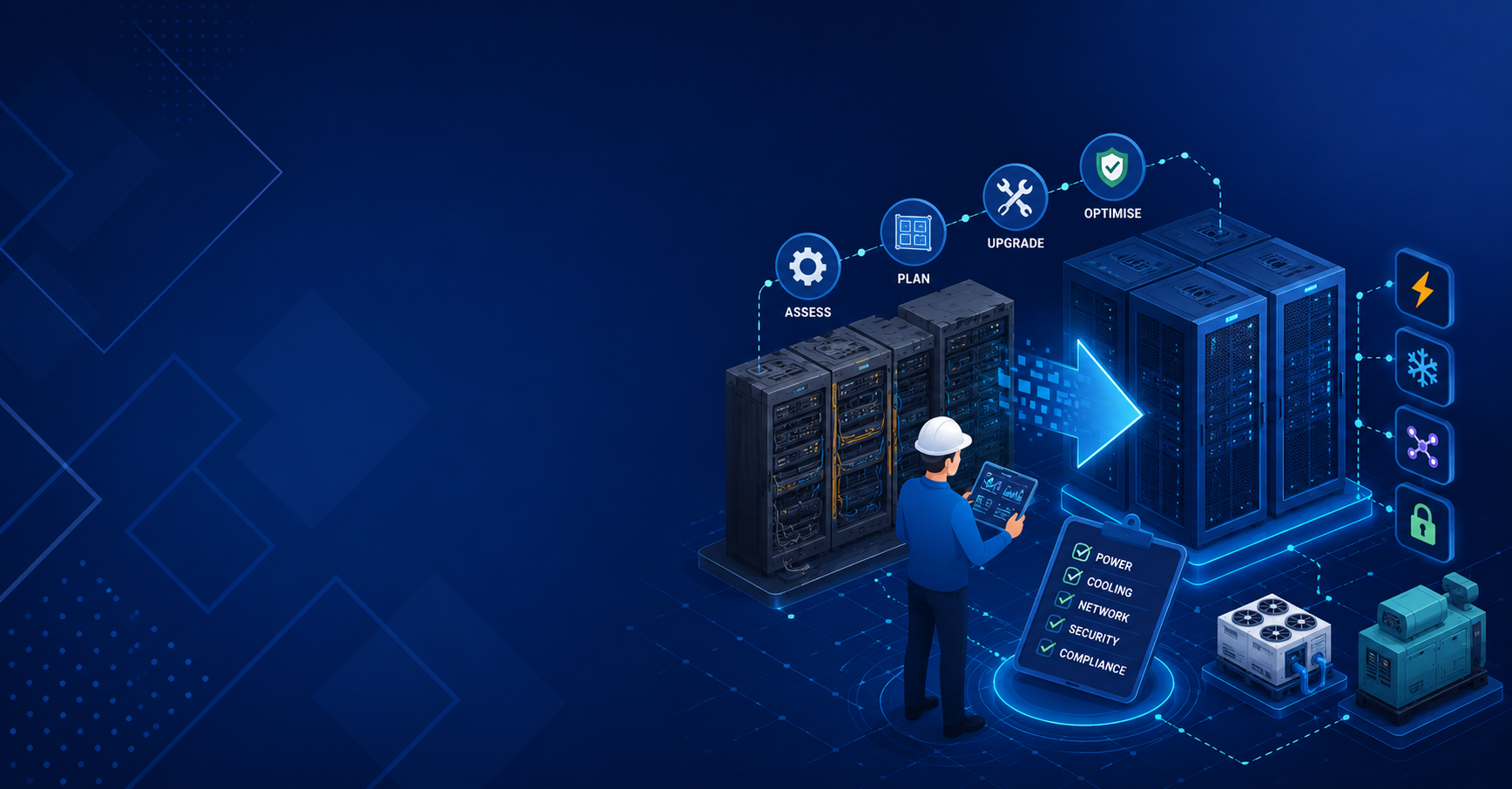
This is why independent certification readiness assessments have become increasingly common among operators pursuing certification.
Vendor Claims Versus Certification Requirements
Another recurring challenge involves assumptions about vendor certifications and marketing claims.
Equipment manufacturers frequently describe products as “Tier ready” or “TIA 942 compliant”. While these claims may be technically accurate for the individual product, they do not guarantee facility-level compliance.
Certification evaluates how infrastructure components operate together as an integrated system.
A highly redundant UPS system does not automatically create a Tier III or Tier IV facility if the surrounding distribution architecture introduces single points of failure.
Similarly, a compliant cooling unit does not guarantee certification if the wider cooling topology fails to meet maintainability requirements.
Certification is determined by system architecture, not individual product specifications.
Operational Readiness Is Often Overlooked
Facility Certification evaluates more than physical infrastructure.
Auditors assess whether operational teams have implemented the processes required to sustain compliance over time.
Areas commonly reviewed include:
· Maintenance management.
· Change management.
· Incident response procedures.
· Training records.
· Testing programmes.
· Documentation governance.
· Operational reporting.
Many facilities with strong engineering foundations encounter difficulties because operational practices have not matured to the same level.
Certification requires alignment between infrastructure and operations.
Both must demonstrate consistency and discipline.
How to Improve Certification Readiness
Organisations seeking certification can reduce risk significantly by adopting several practical measures.
Conduct an Independent Gap Assessment
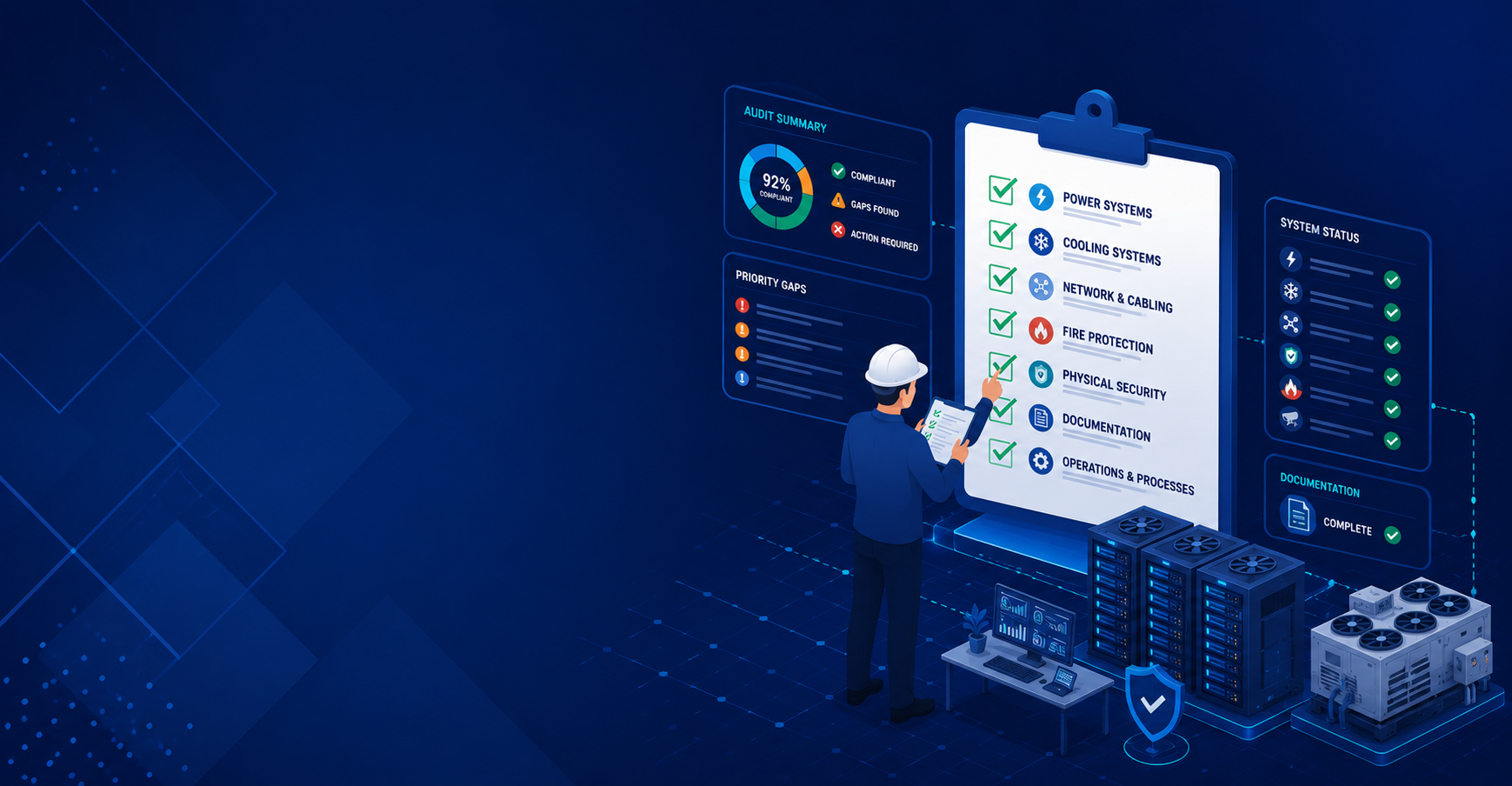
A structured pre-audit review provides visibility into potential issues before formal certification begins.
Maintain Living Documentation
Infrastructure changes should trigger immediate updates to drawings, records, and operational procedures.
Develop a Formal Single Point of Failure Register
Every power and cooling path should be reviewed systematically to identify hidden dependencies.
Validate Redundancy Through Testing
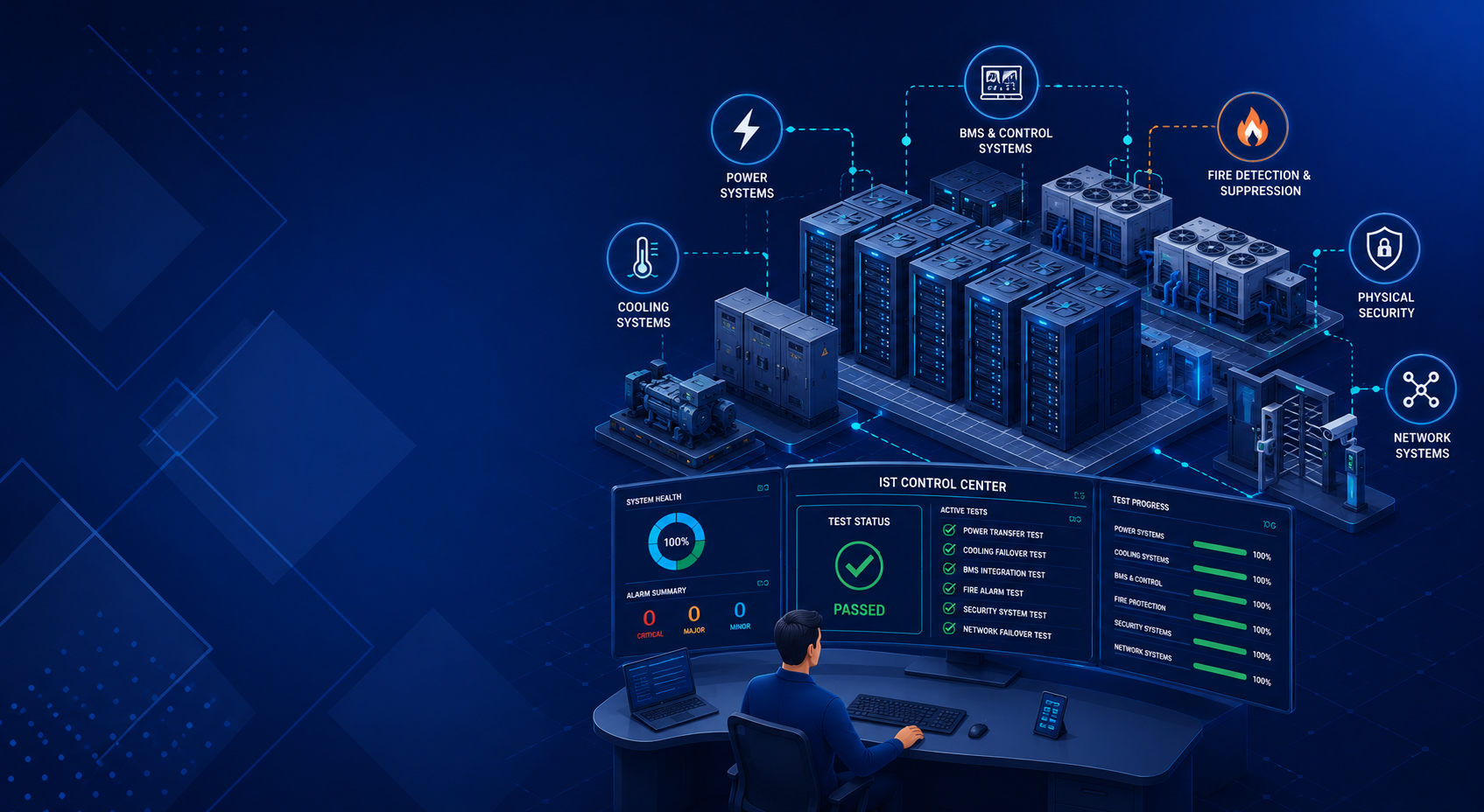
Design assumptions should be verified through practical testing wherever possible.
Train Operations Teams Early
Certification requirements should be understood by facilities personnel, not only by engineering consultants and project teams.
Separate Design and Facility Certification Activities
Allow sufficient operational stabilisation before pursuing Facility Certification.
Attempting to compress certification activities immediately after construction often increases risk.
Key Takeaways
Most TIA 942 certification failures are not caused by a single critical flaw. They result from a combination of issues across power systems, cooling infrastructure, documentation, security, telecommunications, and operational processes.
Power path redundancy and cooling maintainability remain the most common technical failure points. Documentation quality is frequently underestimated despite playing a central role in audit
outcomes. Security, cabling, and operational readiness also contribute significantly to certification success.
The most effective strategy is proactive preparation. Organisations that conduct independent gap assessments, maintain accurate documentation, validate redundancy thoroughly, and involve operational teams early consistently achieve better certification outcomes.
Ultimately, certification success is not determined during the audit itself. It is determined by the decisions made throughout the design, construction, commissioning, and operational lifecycle of the facility.
Over seventy clients across fifteen countries have trusted Technavious with their most significant data center builds.