A Practical Guide to Achieving Data Centre Certification Without Unnecessary Delays or Cost Overruns
Introduction: Why TIA 942 Certification Has Become a Business Requirement
A few years ago, TIA 942 certification was primarily viewed as a differentiator for premium data centre operators. Today, it has become an increasingly important commercial requirement, particularly for operators targeting hyperscalers, global enterprises, financial institutions, and institutional investors.
Customers are no longer evaluating facilities solely on available capacity or location. They want independent validation that infrastructure has been designed, constructed, and operated in accordance with recognised international standards. Certification provides that assurance.
Despite its growing importance, many organisations begin the certification journey without a clear understanding of the process. Questions about certification pathways, audit requirements, timelines, costs, and remediation obligations are common. This often leads to unrealistic expectations, budget shortfalls, and avoidable project delays.
The reality is that TIA 942 certification is not a single event. It is a structured programme that combines technical compliance, documentation discipline, operational readiness, and independent assessment. Understanding how the process works from the outset significantly improves the likelihood of a successful outcome.
Understanding the Two TIA 942 Certification Pathways
One of the most common sources of confusion is the distinction between Design Certification and Facility Certification.
Although both certifications are based on the ANSI/TIA-942 standard, they assess different stages of a data centre’s lifecycle and serve different purposes.
| Certification Type | When Issued | Assessment Basis | Typical Objective |
| Design Certification (DC) | During planning and design | Engineering drawings, specifications, and design documentation | Validate compliance before construction begins |
| Facility Certification (FC) | After construction and commissioning | Physical infrastructure, operational readiness, and documentation | Validate the completed facility |
Design Certification provides confidence that the proposed design aligns with the target Tier requirements. However, it does not automatically guarantee Facility Certification. Once construction is complete, the installed infrastructure must still demonstrate compliance during a formal audit.
For this reason, Design Certification should be viewed as a risk-reduction exercise. Identifying compliance gaps during design is substantially less expensive than discovering them after construction.
Why Early Certification Planning Matters
Many organisations treat certification as a final project milestone. In practice, certification outcomes are largely determined long before auditors arrive on site.
Power architecture, cooling topology, redundancy design, cabling pathways, documentation standards, and operational procedures all influence certification readiness. Decisions made during planning and engineering often have a greater impact on certification success than activities undertaken immediately before the audit.
Projects that integrate certification requirements early typically experience fewer remediation issues, lower overall costs, and shorter certification timelines.
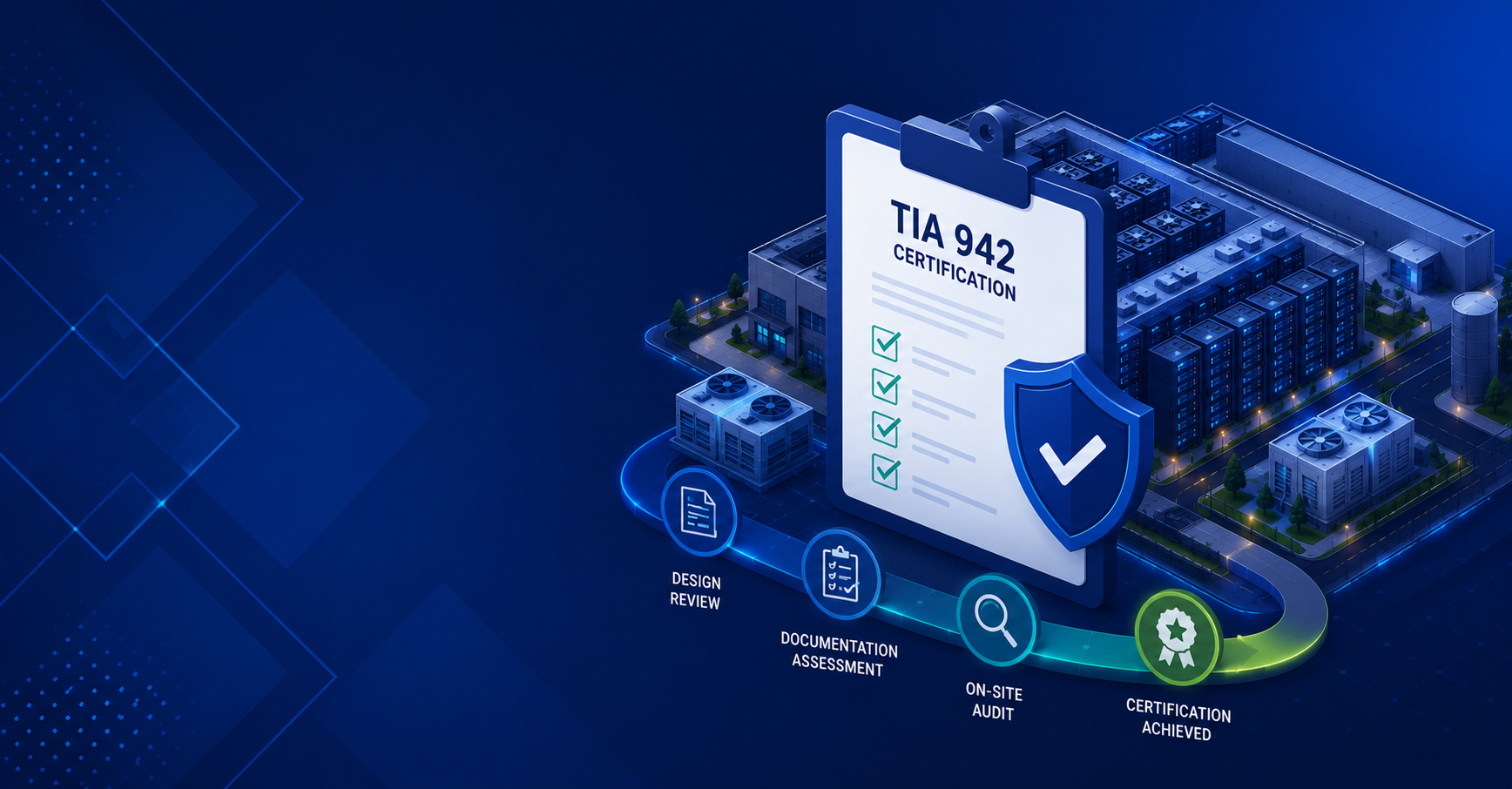
The TIA 942 Certification Process
Step 1: Select and Engage the Certifying Body
The certification journey begins with selecting an accredited certification body authorised to issue ANSI/TIA-942 Rated certifications.
This stage involves defining the certification scope, confirming the target Tier level, establishing audit expectations, and agreeing on a high-level programme schedule.
For Indian data centre operators, it is important to verify that the selected organisation has relevant experience evaluating facilities within the Indian market, including familiarity with local infrastructure conditions and operational practices.
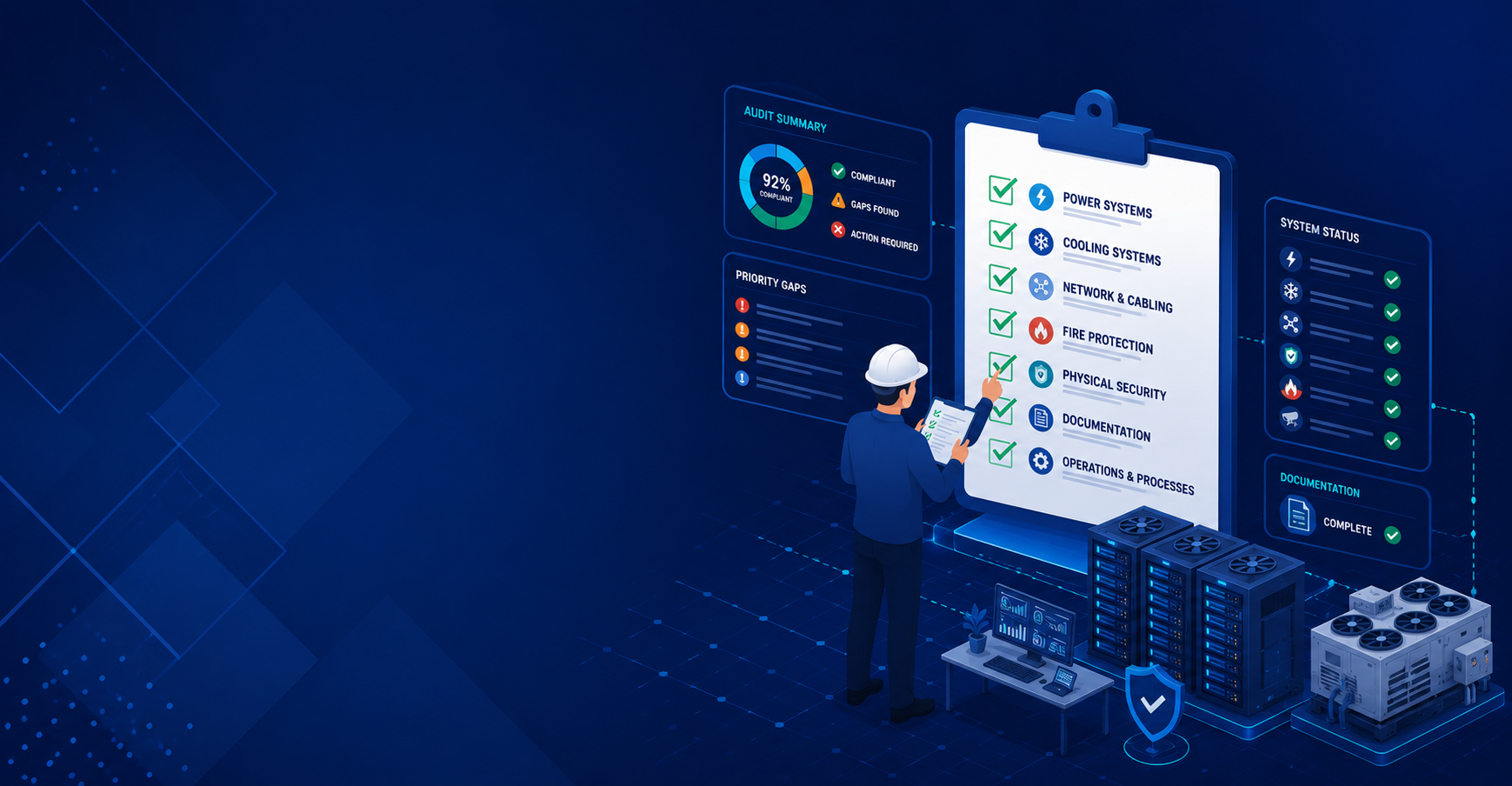
Step 2: Conduct a Pre-Audit Gap Assessment
A pre-audit gap assessment is not mandatory, but it is one of the most valuable investments an operator can make.
The objective is simple. Identify compliance gaps before the formal certification process begins.
A thorough assessment typically reviews:
The outcome is a prioritised remediation plan that allows teams to address issues before they become audit findings.
Organisations that skip this step often spend more time and money resolving non-conformances later.
Step 3: Prepare and Submit Documentation
Documentation quality plays a significant role in certification success.
For Design Certification, the submission package typically includes:
For Facility Certification, additional evidence is required, including:
Many certification programmes experience delays because documentation preparation is underestimated. Producing complete, accurate, and current records often requires more effort than teams initially anticipate.
Step 4: Remote Documentation Review
Once submitted, documentation undergoes detailed technical review.
Auditors evaluate whether the design or facility aligns with the requirements of the selected Tier level. Clarification requests are common during this stage and should not be viewed as a sign of failure. They are a normal part of the review process.
The duration of this phase depends heavily on documentation quality. Well-organised submissions typically move quickly. Incomplete or inconsistent submissions often result in multiple rounds of clarification and extended review timelines.
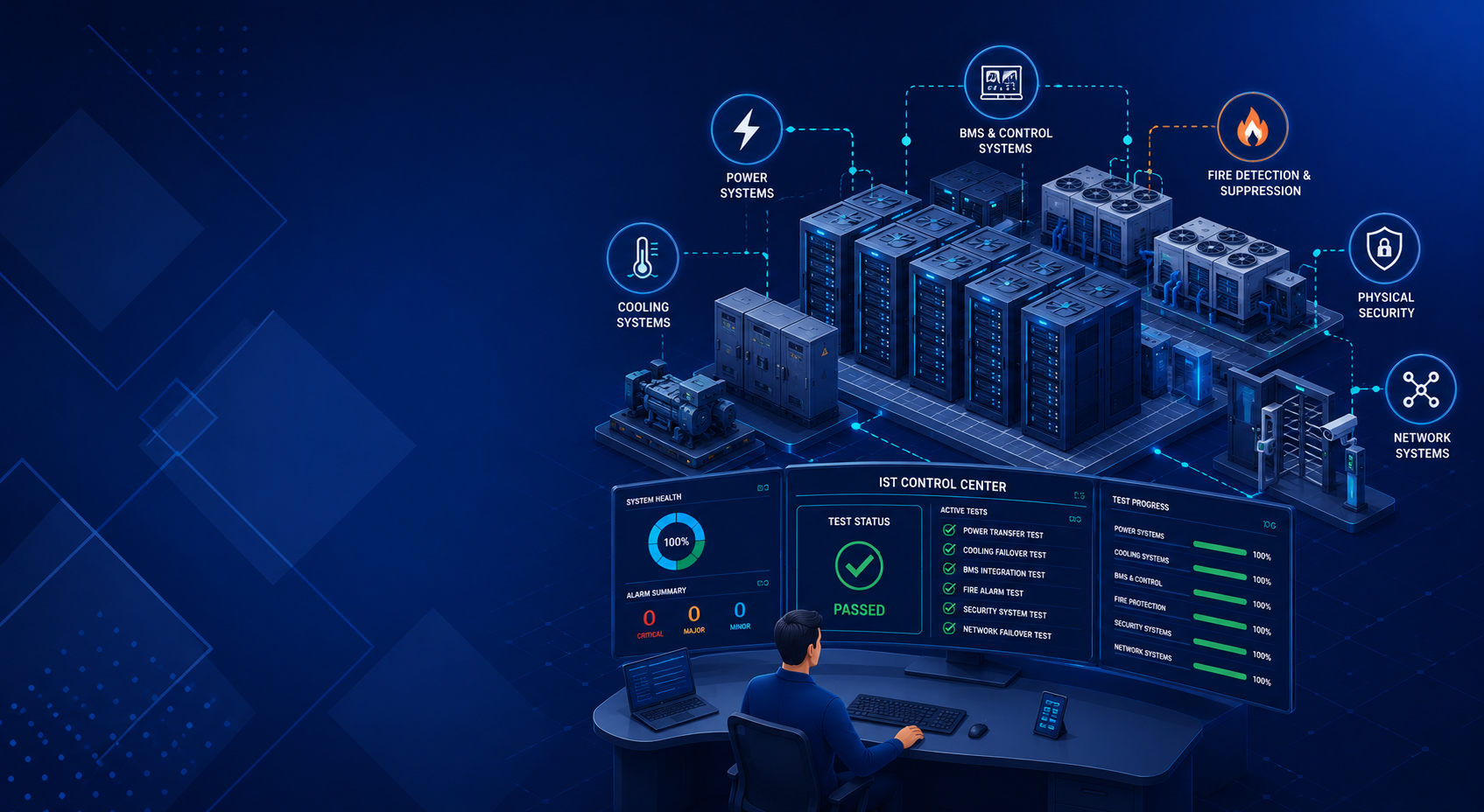
Step 5: On-Site Audit and Validation
For Facility Certification, auditors conduct an on-site assessment after documentation review has been completed successfully.
The audit focuses on verifying that installed infrastructure matches documented design intent and complies with the standard.
Activities typically include:
Auditors do not evaluate individual systems in isolation. They assess how the facility performs as an integrated environment.
This distinction is important because many certification failures arise from system interactions rather than equipment performance alone.
Step 6: Remediation and Non-Conformance Closure
Following the audit, the certifying body issues a report outlining any identified non-conformances.
These findings are generally categorised according to severity and remediation requirements.
Some issues may require documentation updates, while others may require physical infrastructure modifications. Power redundancy gaps, cooling topology issues, and documentation discrepancies are among the most common findings.
Certification cannot proceed until all major non-conformances have been resolved and satisfactory evidence has been provided.
This stage frequently determines the overall duration and cost of the certification programme.
Step 7: Certificate Issuance and Ongoing Compliance
Once all major findings have been addressed, certification is issued.
However, certification should not be viewed as a one-time achievement.
Operational practices, maintenance standards, and infrastructure changes must continue to align with certification requirements throughout the certificate lifecycle. Annual surveillance audits help verify that compliance is being maintained over time.
Facilities that allow documentation quality or operational discipline to decline may encounter challenges during surveillance reviews.
Understanding Certification Costs
One of the most frequently asked questions concerns cost.
The answer varies significantly depending on facility size, Tier level, existing readiness, documentation maturity, and the extent of remediation required.
Certification programmes typically include five major cost categories:
Pre-Audit Assessment
Independent assessments help identify gaps before the formal audit and often deliver the highest return on investment within the certification process.
Certification Fees
These include documentation review, audit activities, reporting, and certification administration.
Documentation Preparation
Many organisations underestimate the effort required to prepare and organise certification evidence.
Remediation Activities
Remediation is often the largest and least predictable cost category.
Infrastructure modifications, redundancy improvements, documentation updates, and operational enhancements can significantly exceed certification fees themselves.
Surveillance Audits
Annual surveillance activities should be incorporated into long-term operational budgets rather than treated as exceptional costs.
The most important lesson is that certification fees are rarely the largest expenditure. Remediation almost always represents the greatest financial variable.
Typical Certification Timelines
A realistic certification timeline depends on facility readiness.
For a well-prepared project, the process generally includes:
| Phase | Typical Duration |
| Gap Assessment | 4–8 weeks |
| Documentation Preparation | 4–8 weeks |
| Technical Review | 8–16 weeks |
| On-Site Audit | 2–5 days |
| Remediation and Evidence Submission | 4–12 weeks |
| Certificate Issuance | 2–4 weeks |
For most facilities, the complete journey from engagement to certification requires approximately nine to eighteen months.
Projects with significant infrastructure deficiencies or documentation challenges should expect longer timelines.
Attempting to compress the process often increases risk rather than reducing duration.
The Decisions That Most Influence Certification Success
Experience across multiple certification programmes shows that a small number of decisions consistently influence outcomes.
Start Earlier Than You Think Necessary
Certification requirements should be incorporated during design rather than after construction.
Invest in Documentation
Accurate drawings, maintenance records, operational procedures, and commissioning evidence accelerate every stage of the process.
Treat Gap Assessments Seriously
Independent reviews provide an opportunity to resolve issues before they become formal audit findings.
Allow Time for Remediation
Physical infrastructure modifications require engineering, procurement, installation, testing, and validation. These activities cannot be compressed indefinitely without increasing risk.
Involve Operations Teams Early
Facility Certification evaluates operational readiness as well as infrastructure performance. Operations personnel should understand both the facility and the certification requirements.
Key Takeaways
TIA 942 certification has evolved from a competitive differentiator into an increasingly important requirement for operators seeking hyperscaler, enterprise, and institutional customers.
Successful certification depends on far more than passing an audit. It requires strong design discipline, robust documentation, operational readiness, and early identification of compliance gaps.
The most successful programmes begin certification planning during design, invest in independent gap assessments, maintain high-quality documentation, and allocate sufficient time for remediation. Organisations that approach certification as a structured lifecycle programme rather than a final project milestone consistently achieve better outcomes, lower costs, and shorter timelines.
Ultimately, certification is not simply about obtaining a certificate. It is about demonstrating that a facility can deliver the resilience, reliability, and operational maturity that customers increasingly expect from modern data centre infrastructure.
Over seventy clients across fifteen countries have trusted Technavious with their most significant data center builds.